Visualising your fitted non-linear dimension reduction model in the high-dimensional data space

Jayani P.G. Lakshika

Joint work with Prof. Dianne Cook, Dr. Paul Harrison, Dr. Michael Lydeamore, Dr. Thiyanga S. Talagala

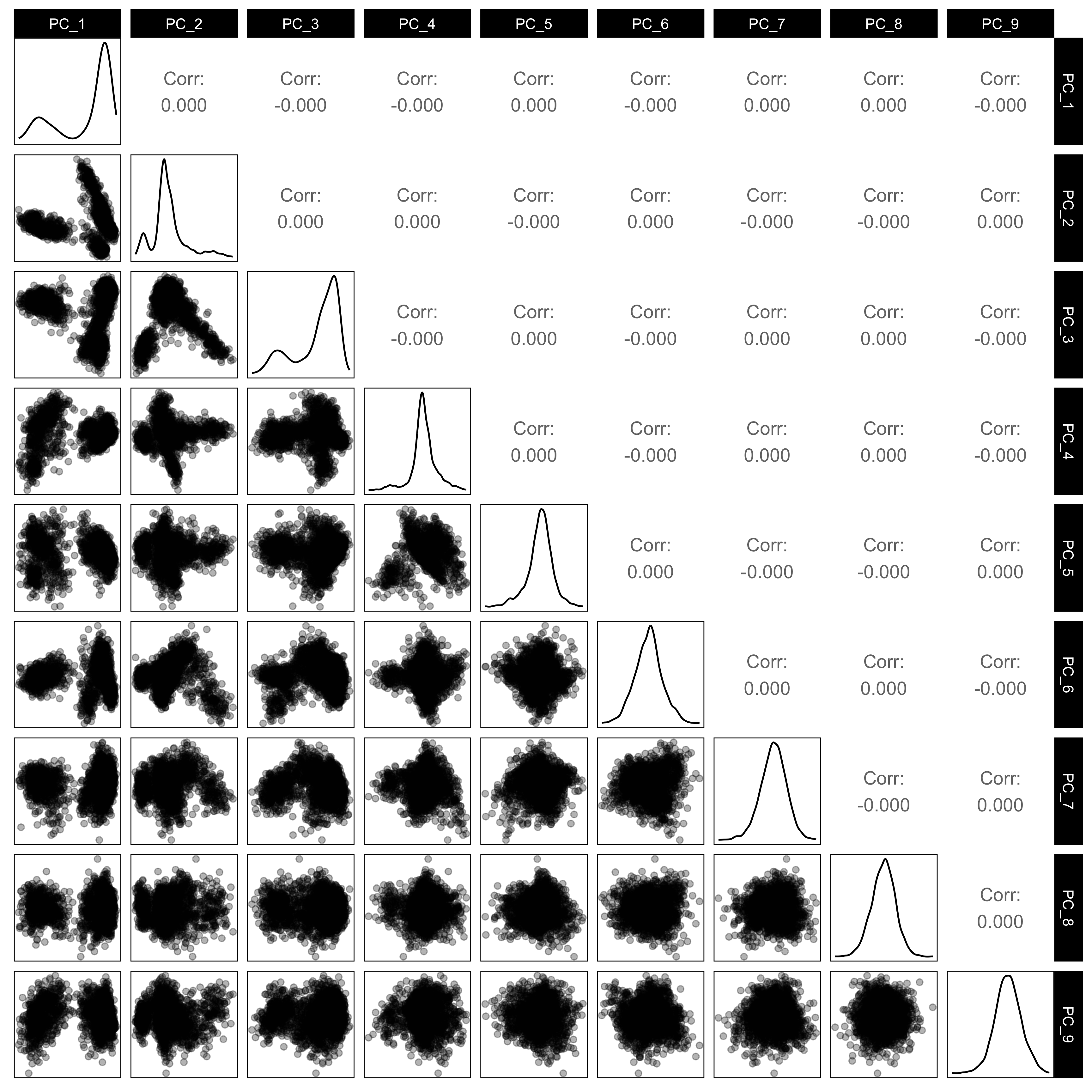
High-dimensional data


\(X = \begin{bmatrix} \textbf{x}_{11} & \textbf{x}_{12} & \cdots & \textbf{x}_{1p}\\ \textbf{x}_{21} & \textbf{x}_{22} & \cdots & \textbf{x}_{2p} \\\vdots & \vdots & \ddots & \vdots & \\ \textbf{x}_{n1} & \textbf{x}_{n2} & \cdots & \textbf{x}_{np}\\\end{bmatrix}\)

Peripheral Blood Mononuclear Cells (PBMC)

Tour

What is a tour?

  • Interactive and dynamic graphics to visualise high-dimensional data.

Why is the tour technique employed?

  • Tour shows a sequence of linear projections as a movie.

  • It involves mentally assembling multiple low-dimensional views to comprehend the structure in higher dimensions.

Software: langevitour

Non-linear dimensional reduction (NLDR) techniques

NLDR techniques designed to capture the complex and non-linear relationships present within high-dimensional data.
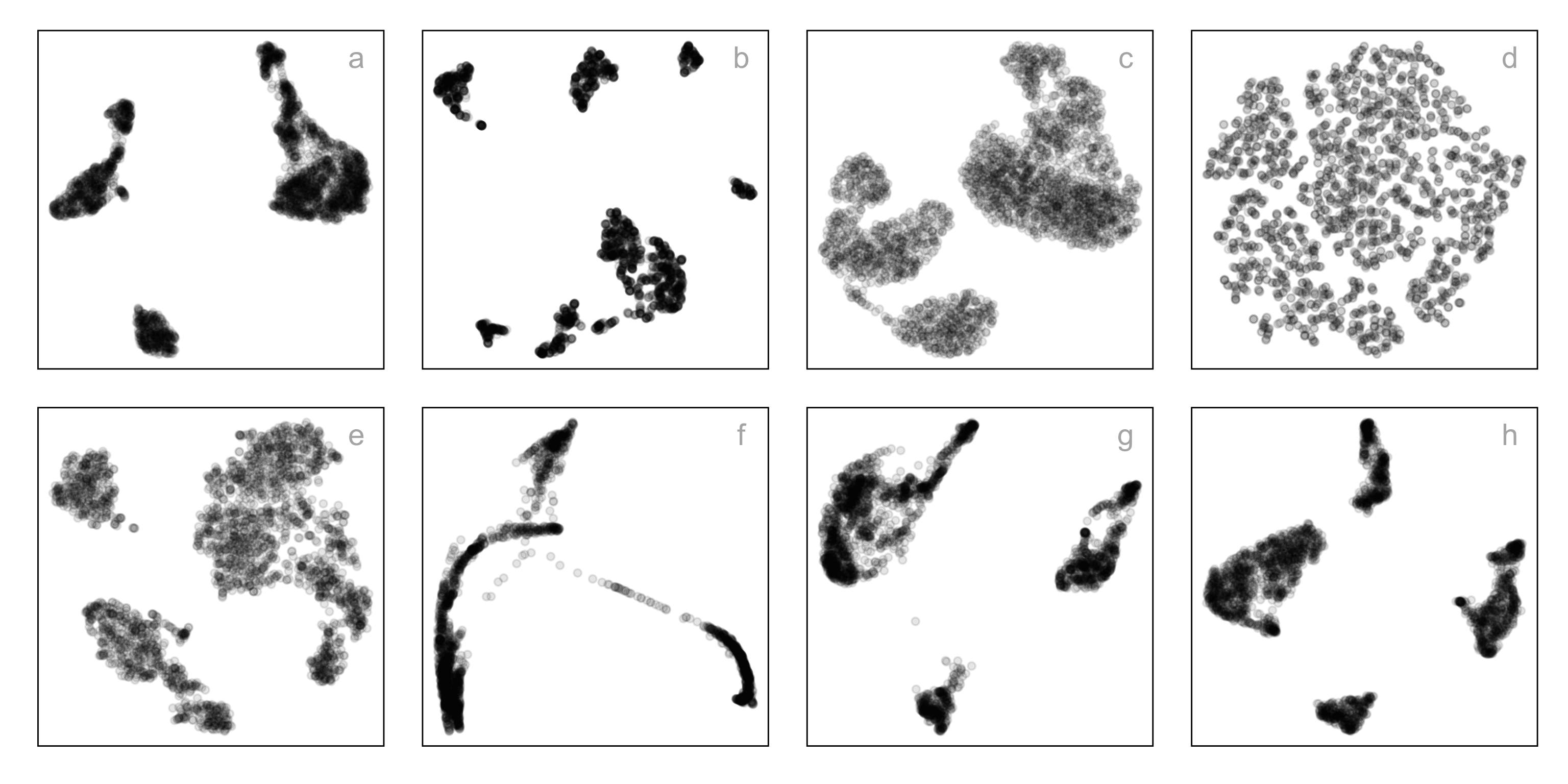
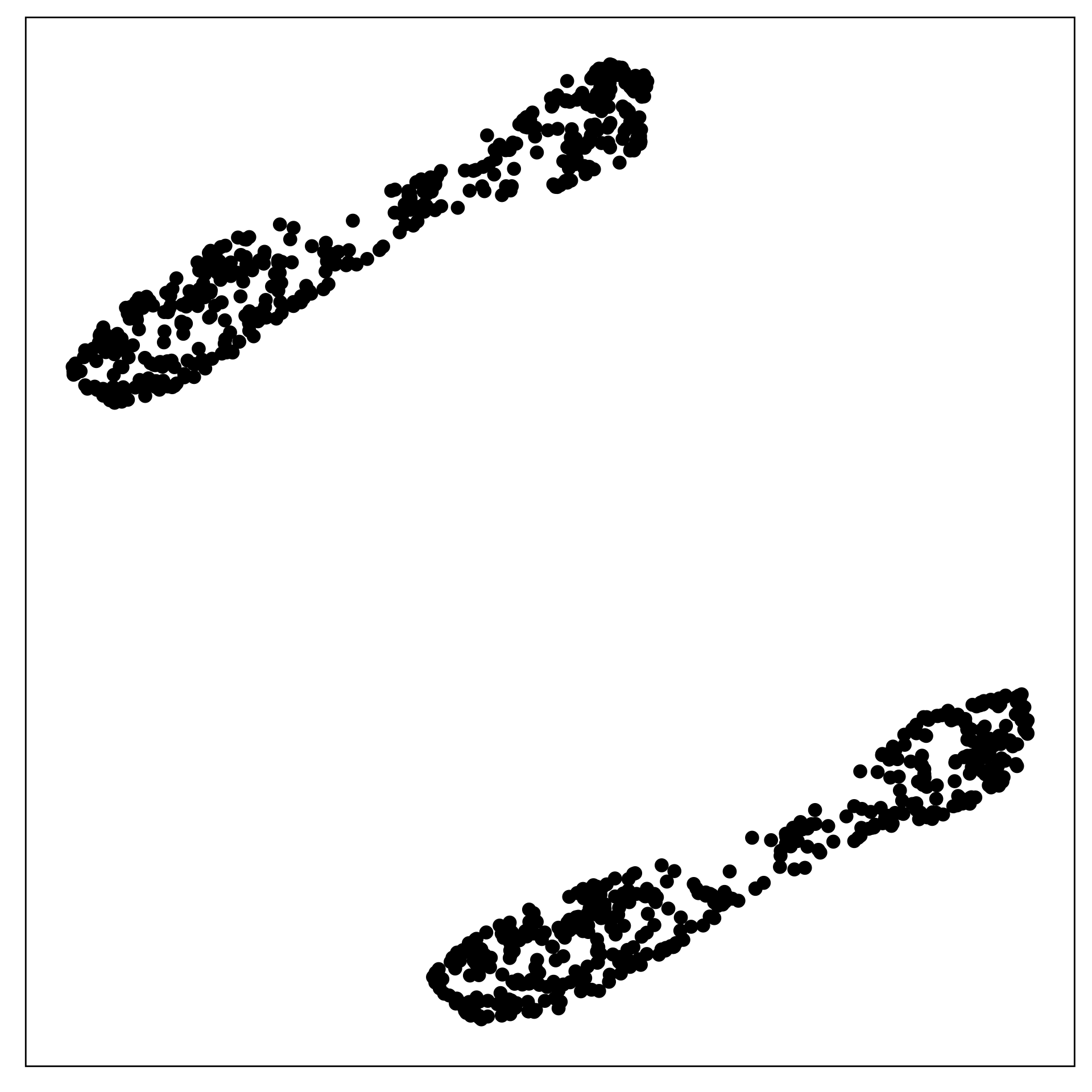
Match-a-roo (1/4)
The data shown in the two displays is the

  1. SAME
  1. DIFFERENT

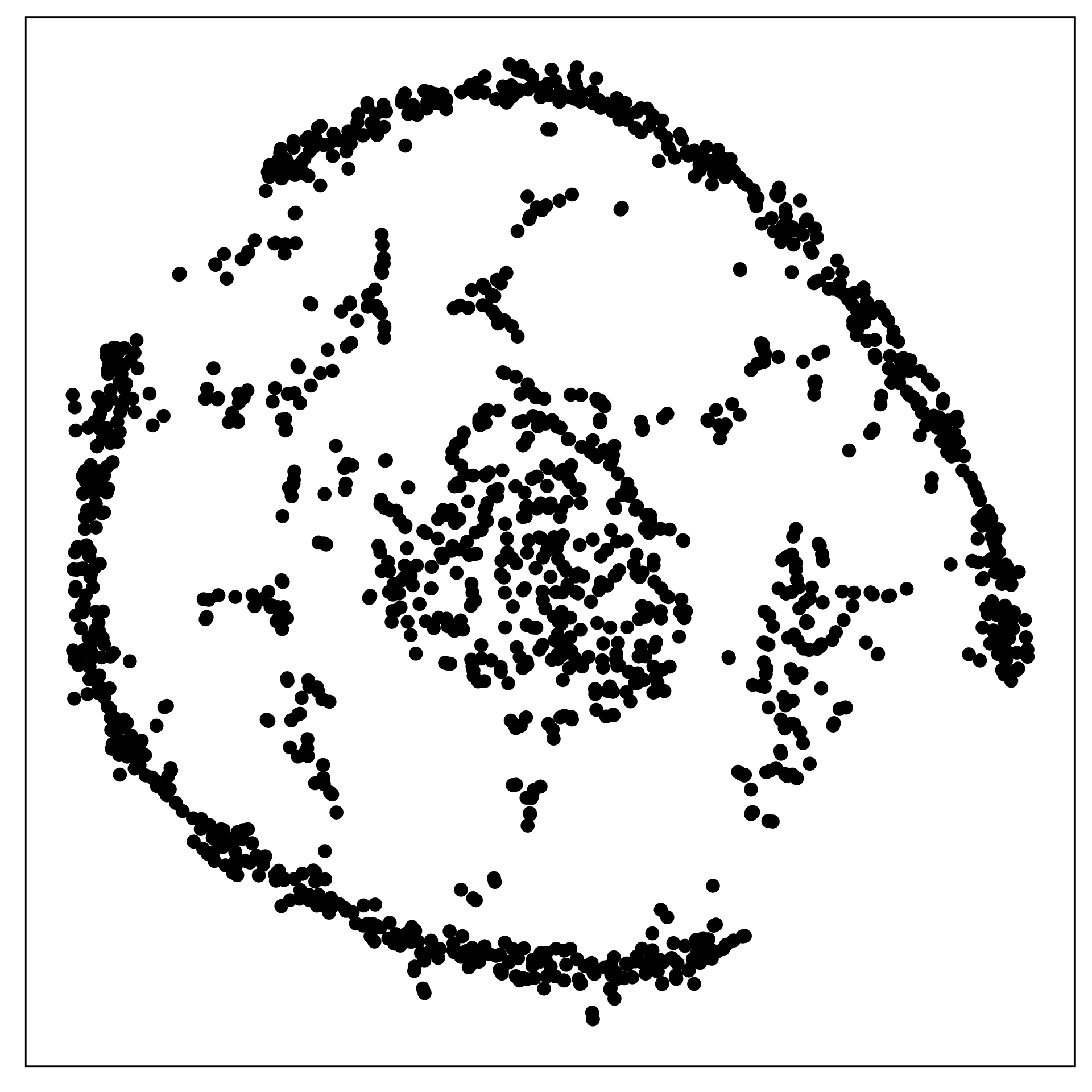
Match-a-roo (2/4)

The data shown in the two displays is the

  1. SAME
  1. DIFFERENT

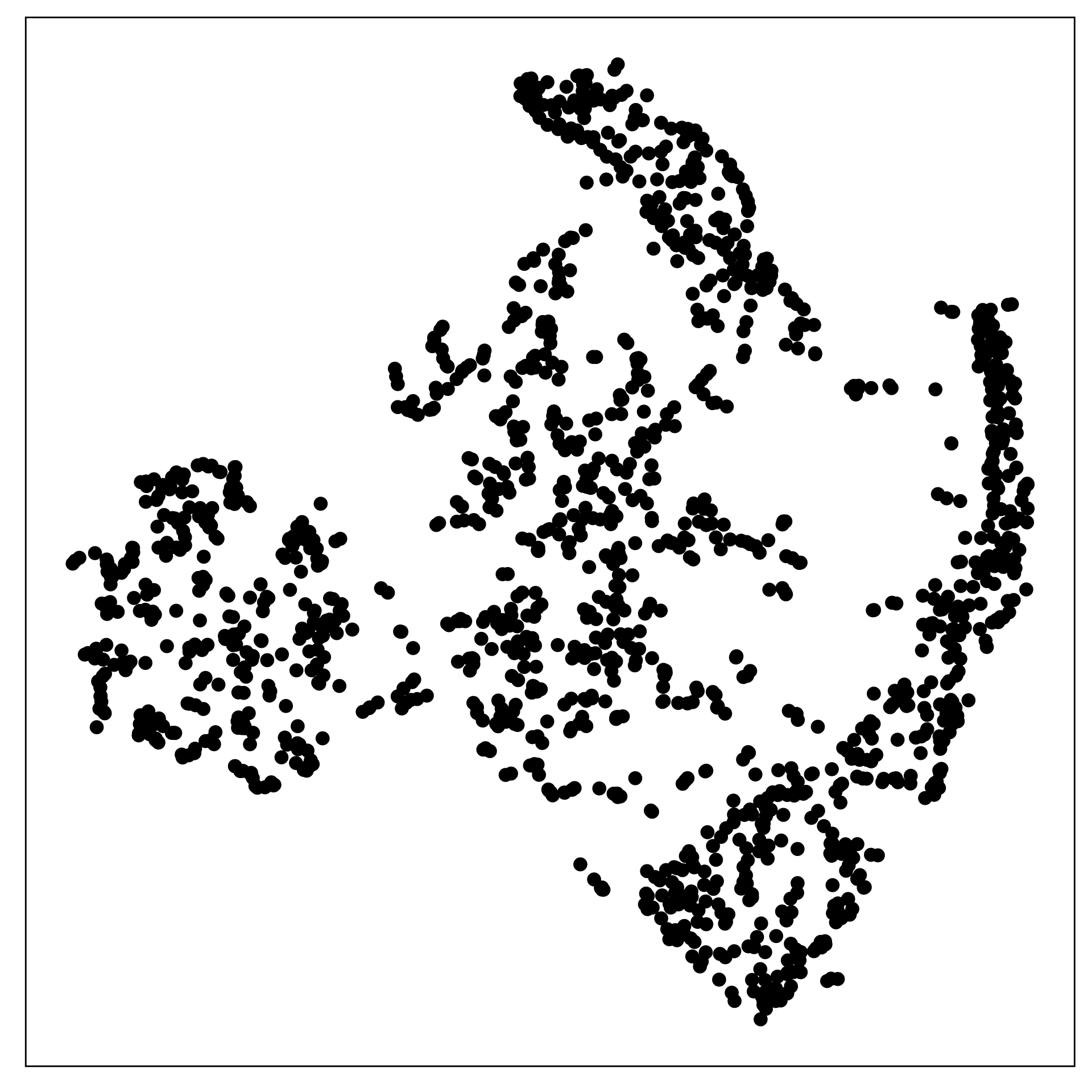
Match-a-roo (3/4)

The data shown in the two displays is the

  1. SAME
  1. DIFFERENT

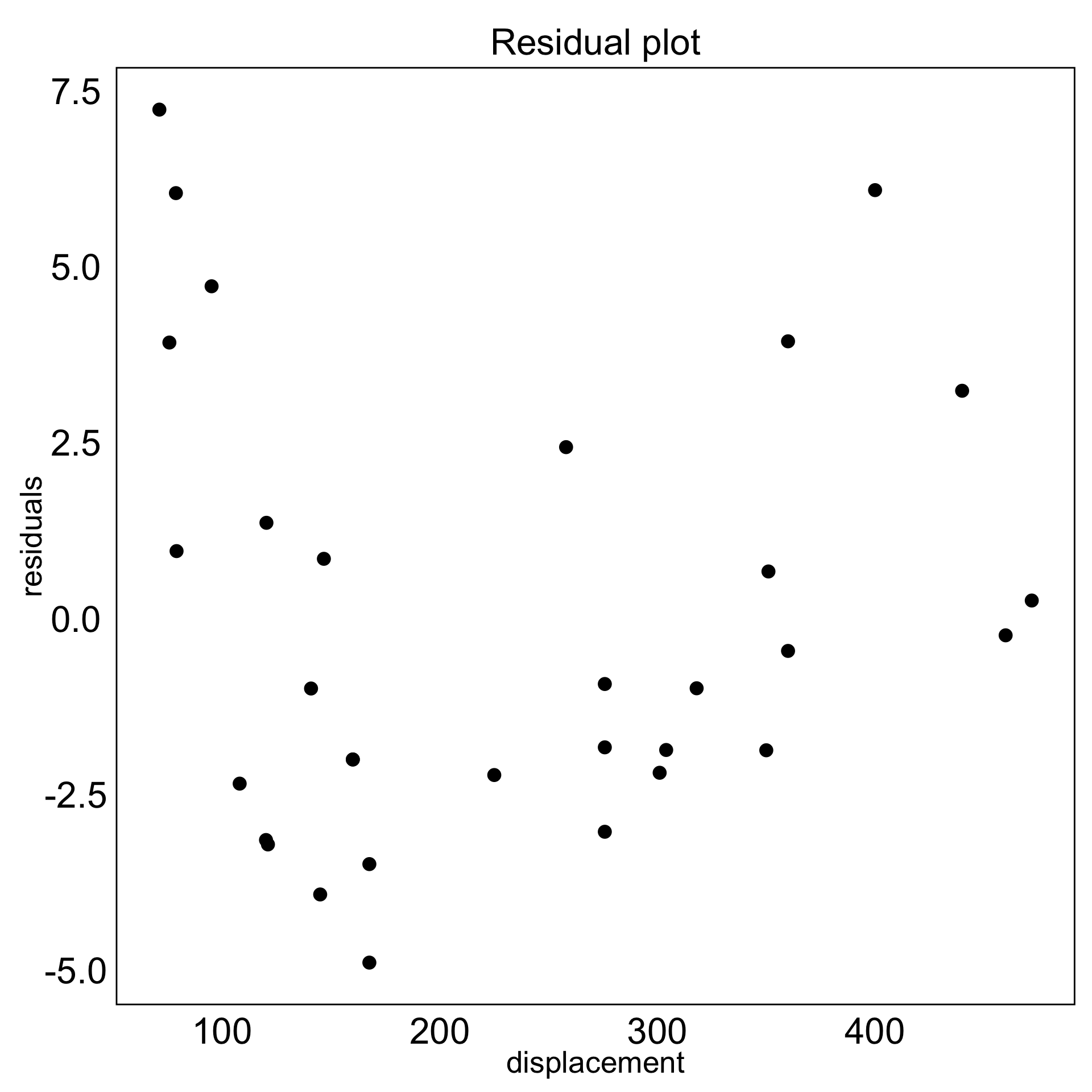
Match-a-roo (4/4)

The data shown in the two displays is the

  1. SAME
  1. DIFFERENT

Motivation

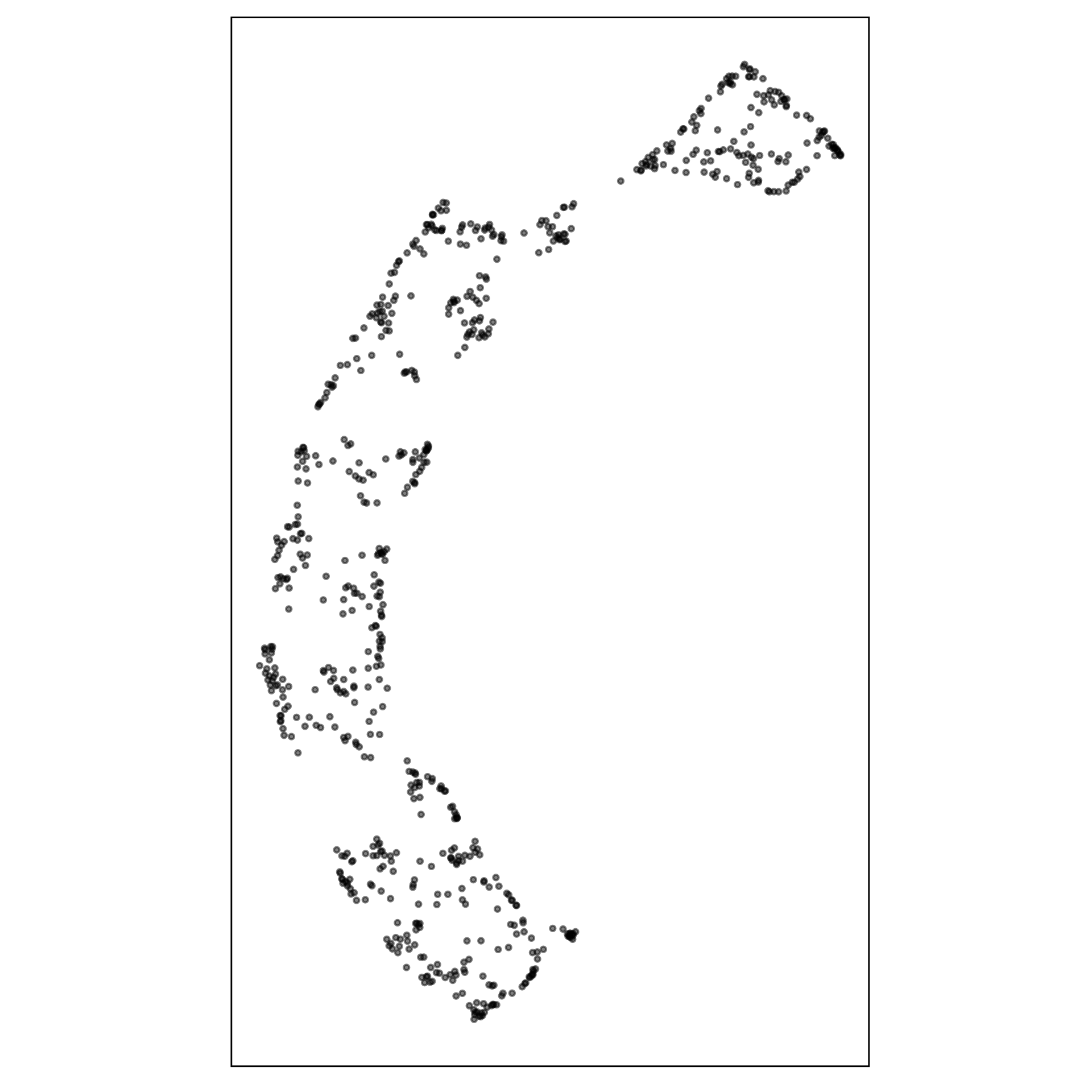
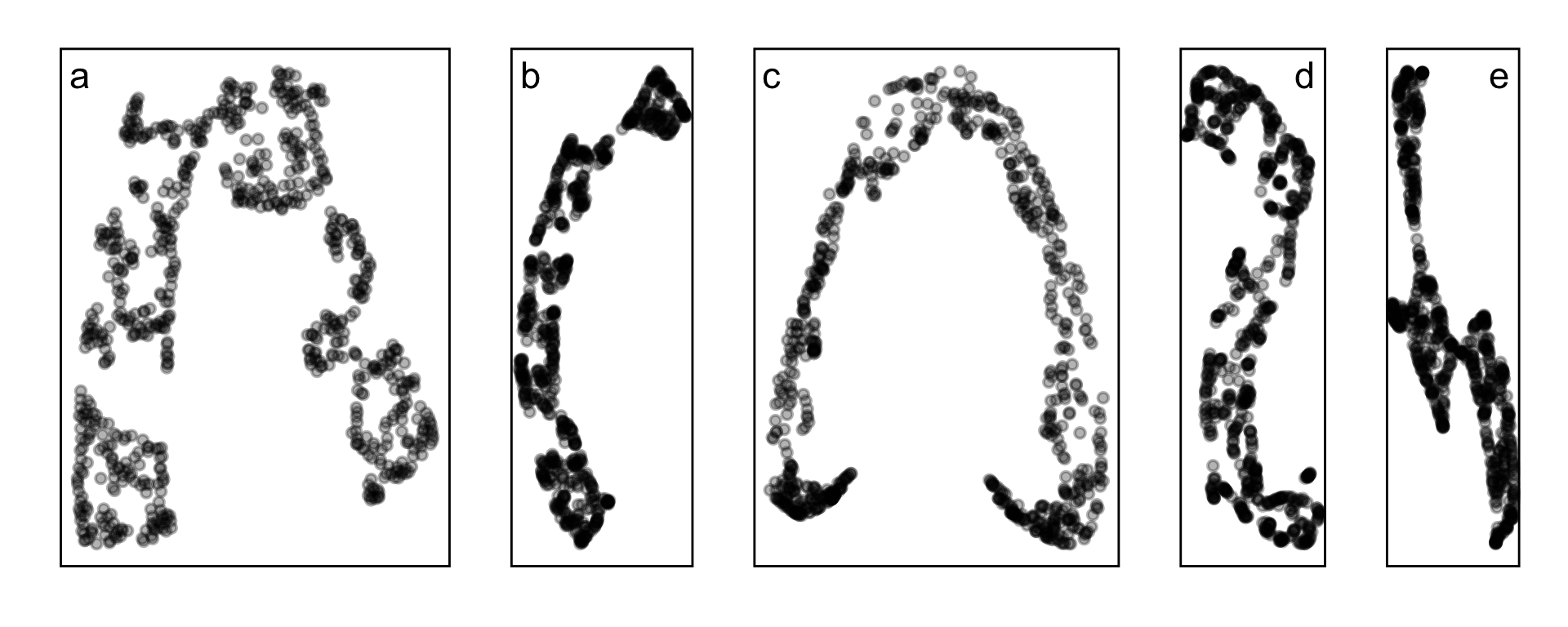
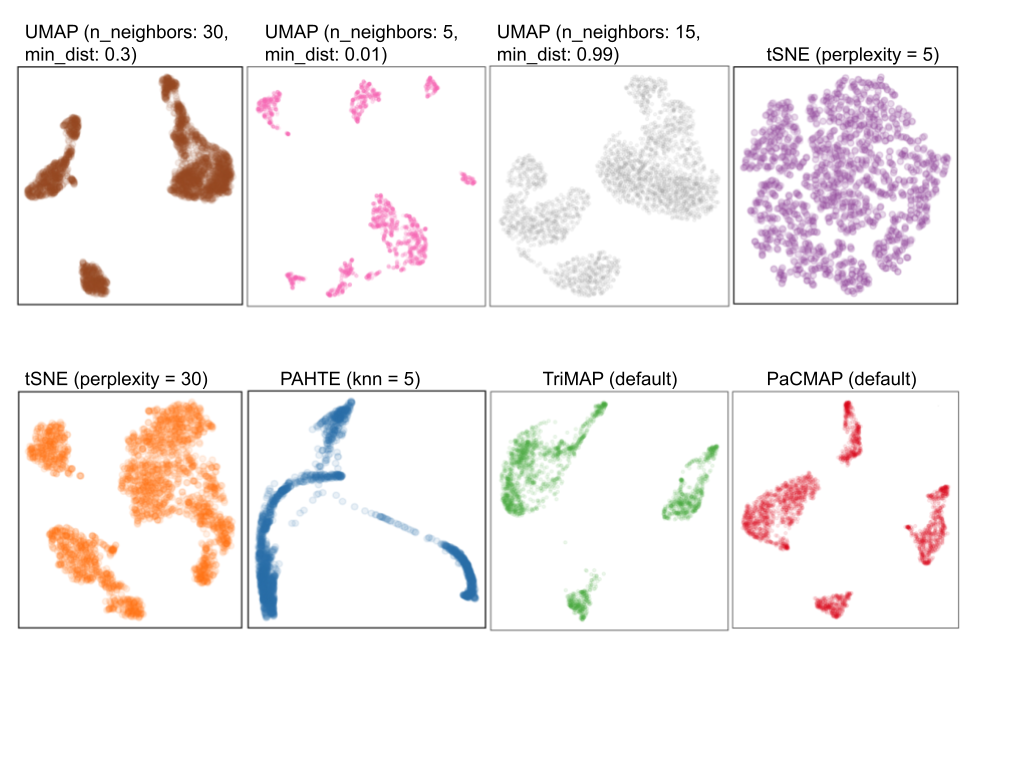
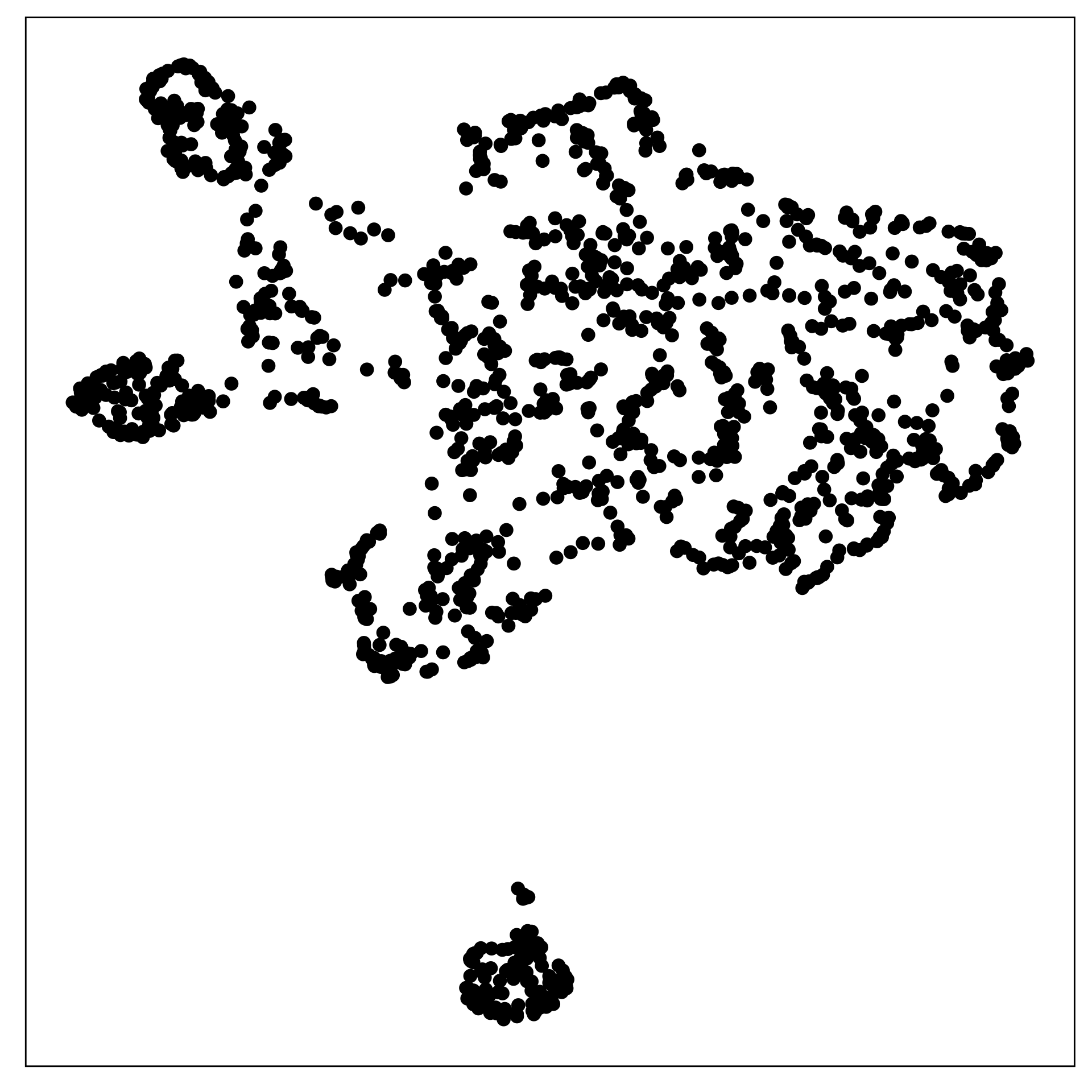
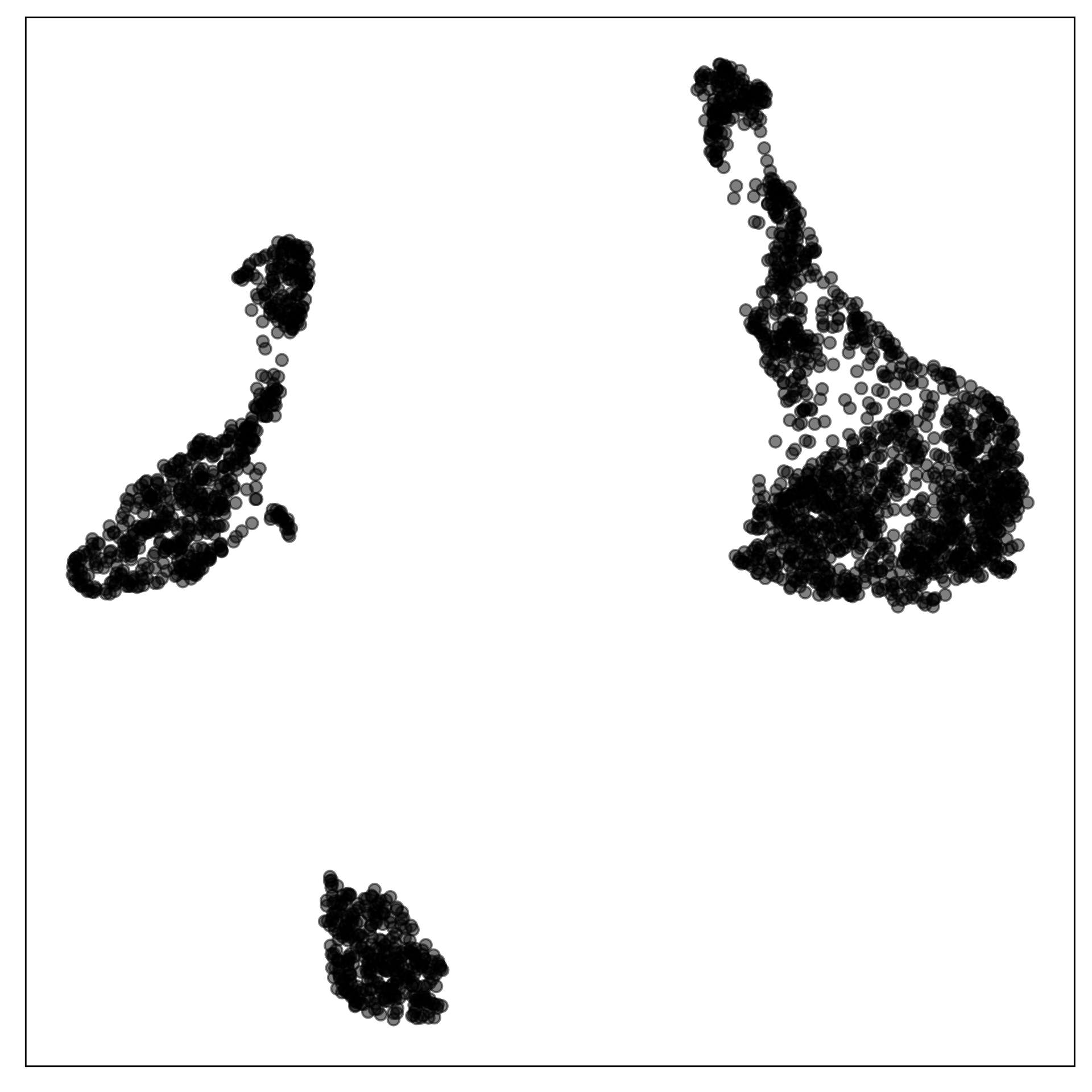
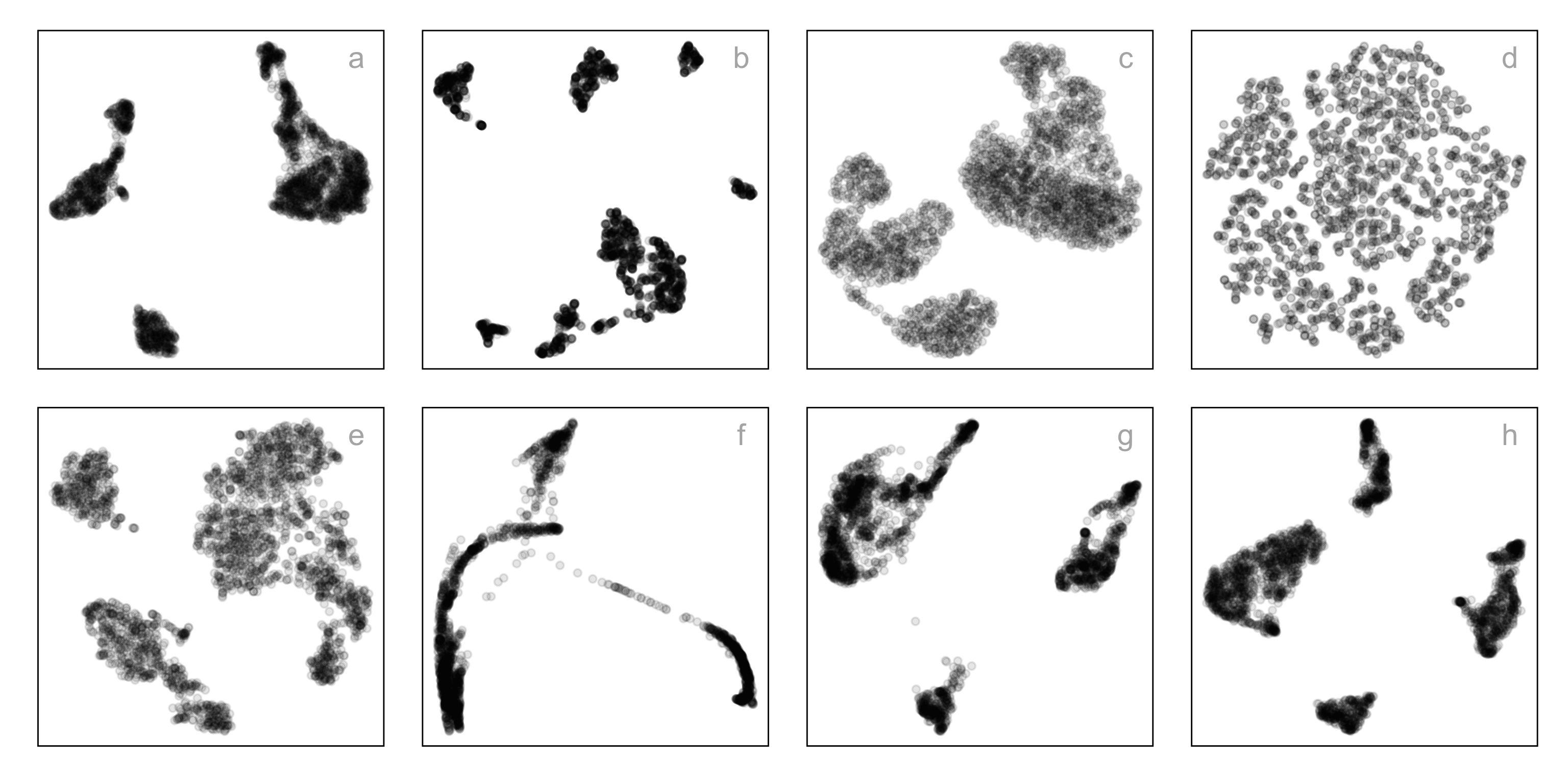
Single-cell gene expression: same data, different NLDR + hyper-parameters
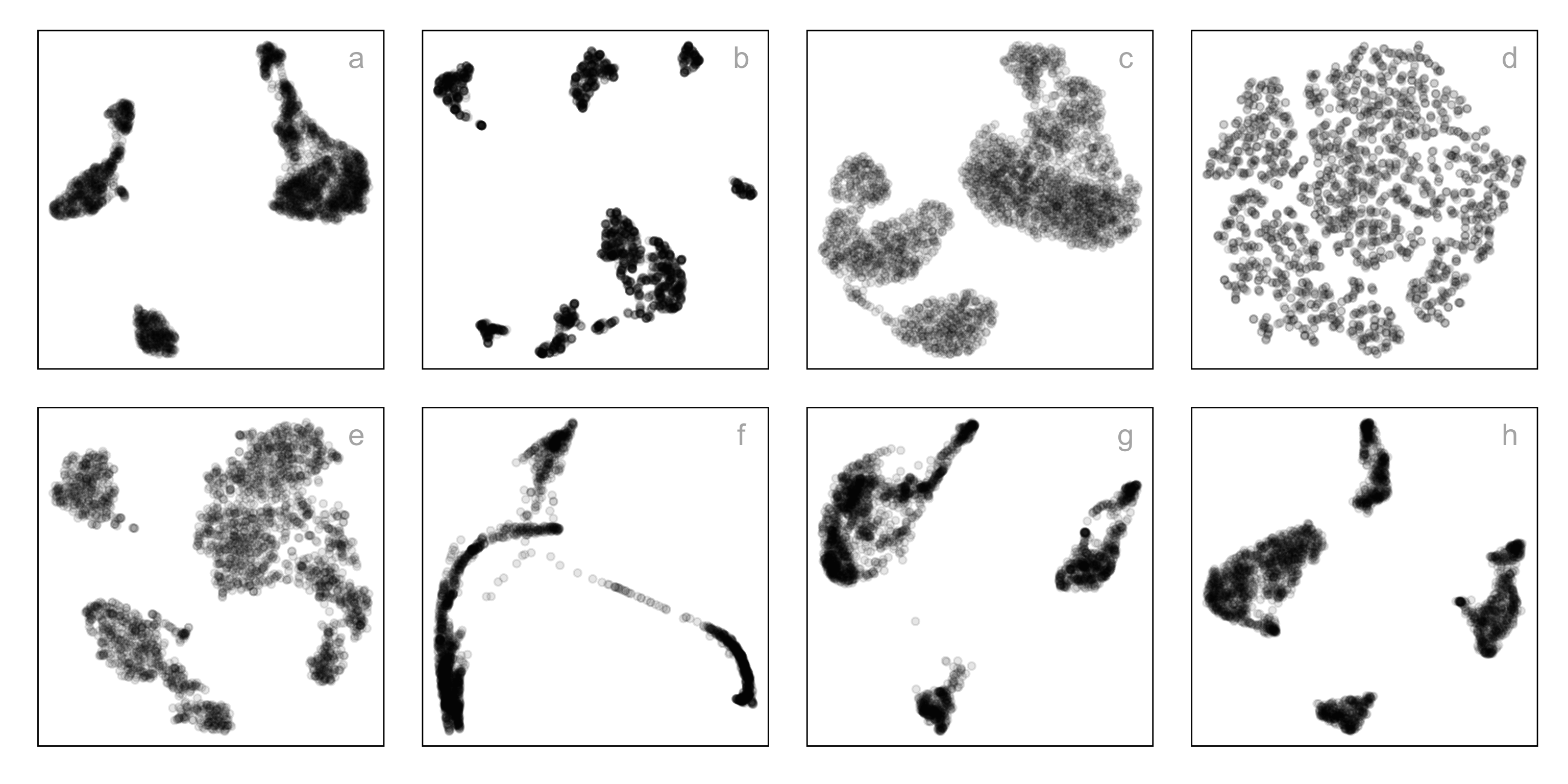
How do you decide which is the most reasonable representation?

This is the published figure.
Here is the 9D data viewed using a grand tour, linear projections into 2D.

Show “model-in-the-data-space”

data-in-the-model-space

model-in-the-data-space
S-curve in 7D

\(\theta \sim U(-3\pi/2, 3\pi/2)\)

\(X_1 = \sin(\theta)\)

\(X_2 \sim U(0, 2)\)

\(X_3 = \text{sign}(\theta) \times (\cos(\theta) - 1)\)

True model: \(T=(X_1, X_2, X_3)\)


\(X_4, X_5, X_6, X_7\) are additional noise dimensions

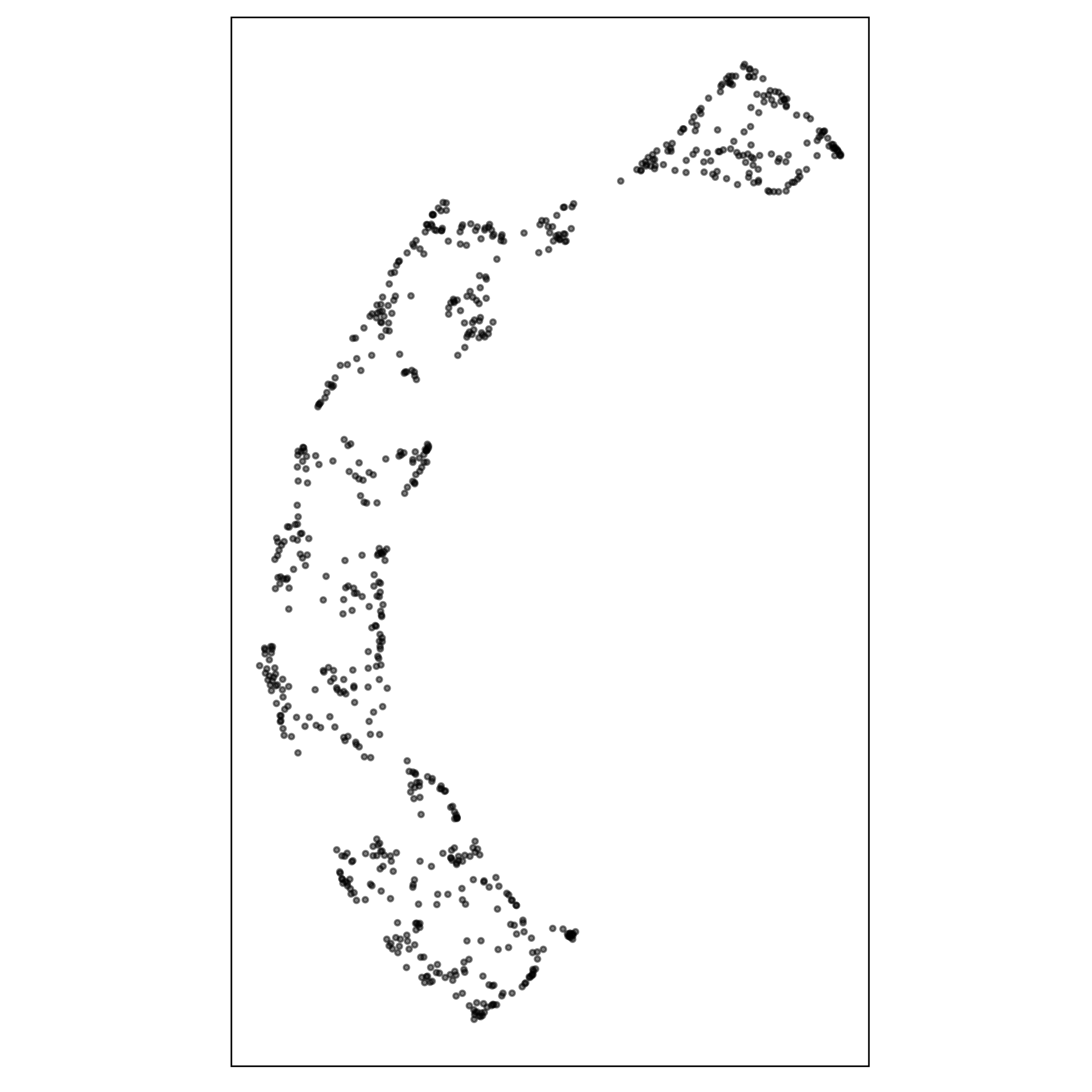
data-in-the-model-space


What is the model?

data-in-the-model-space
model-in-the-data-space

Overview of method

1. Construct the \(2\text{-}D\) model
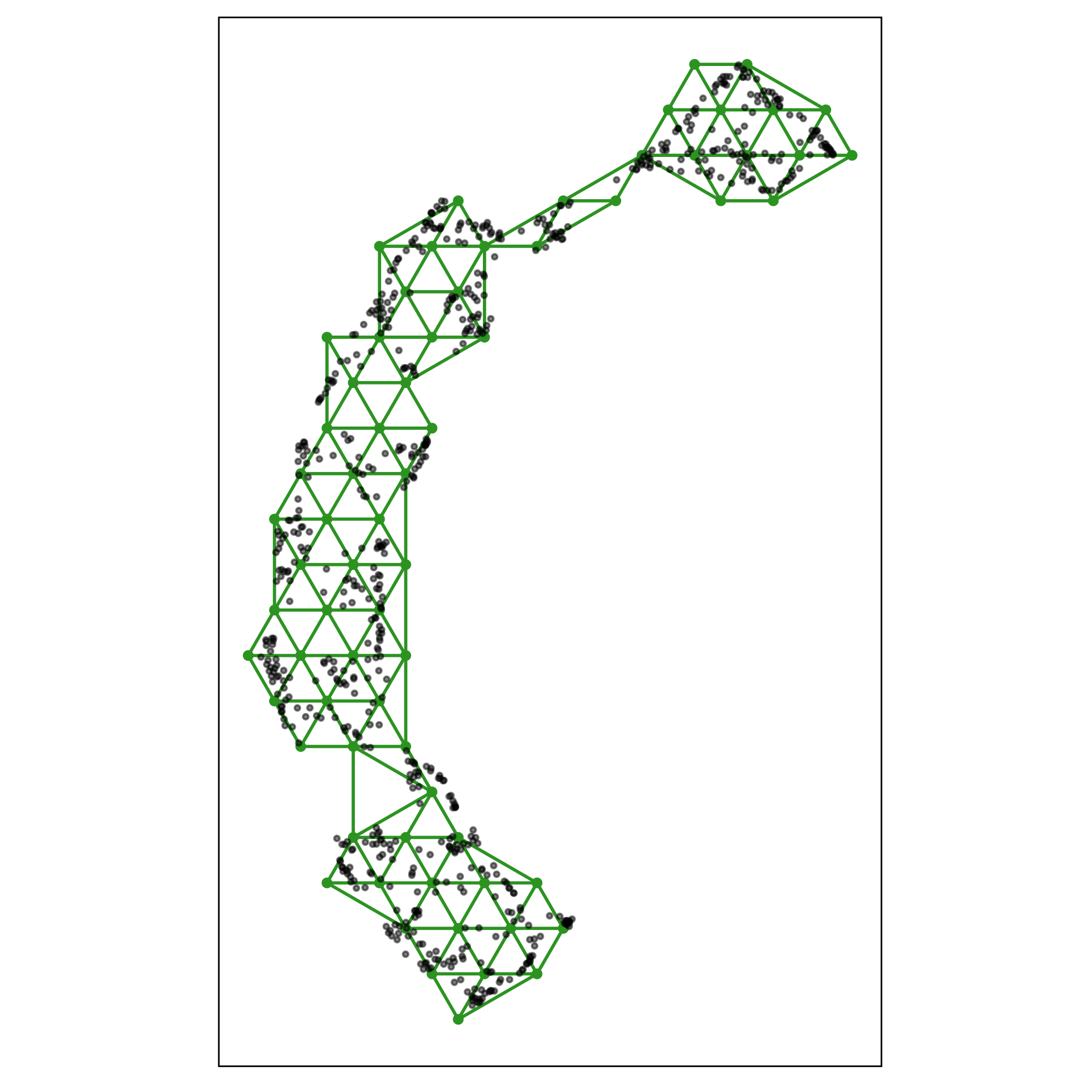
2. Lift the model into high-dimensions

Steps of the algorithm

1. Construct the \(2\text{-}D\) model
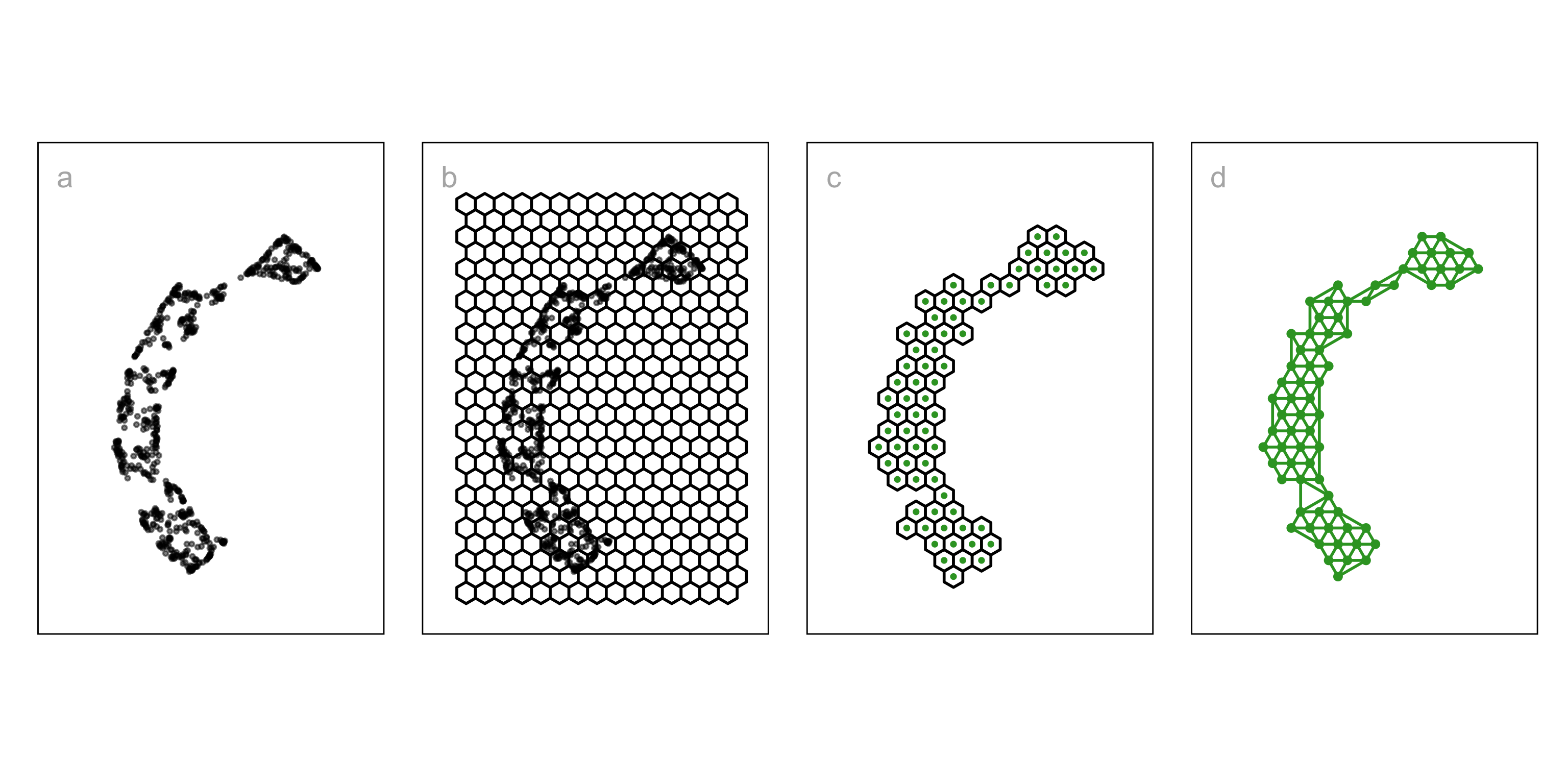
  1. NLDR layout, b. hex bin , c. bin centers, d. triangulation wire frame.

Steps of the algorithm

2. Lift the model into high-dimensions
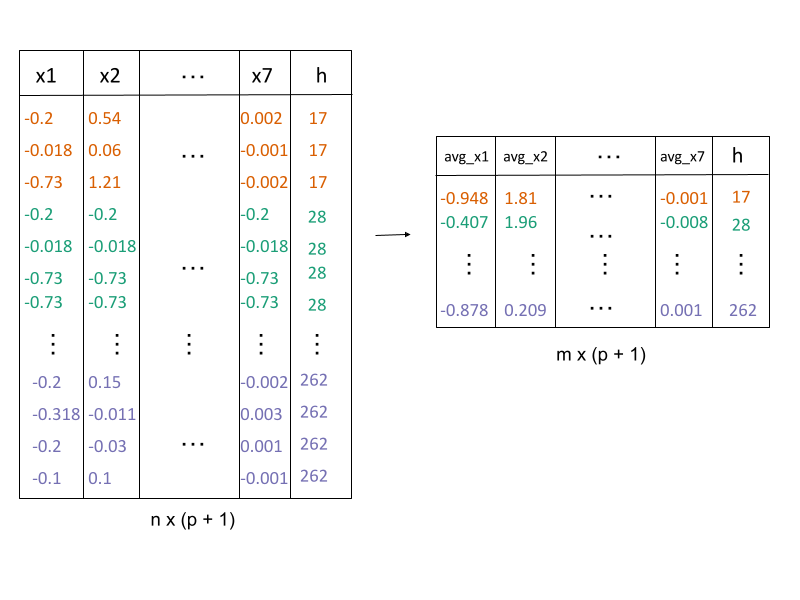
Factors for fitting and measuring fit

  • NLDR layout, different methods and different hyper-parameters
  • Number of bins
  • Bin start position
  • Low density removal
  • Long edge removal
  • MSE in high-dimensions: mean sum of squared differences between observed and fitted values

\[\frac{1}{n}\sum_{h = 1}^{b}\sum_{i = 1}^{n_h}\sum_{j = 1}^{p} ({x}_{hij} - C^{(p)}_{hj})^2\] \(n =\) the number of observations,

\(b =\) the number of bins,

\(n_h =\) the number of observations in \(h^{th}\) bin,

\(p =\) the number of variables,

\({x}_{hij} =\) the \(j^{th}\) dimensional data of \(i^{th}\) observation in \(h^{th}\) hexagon.

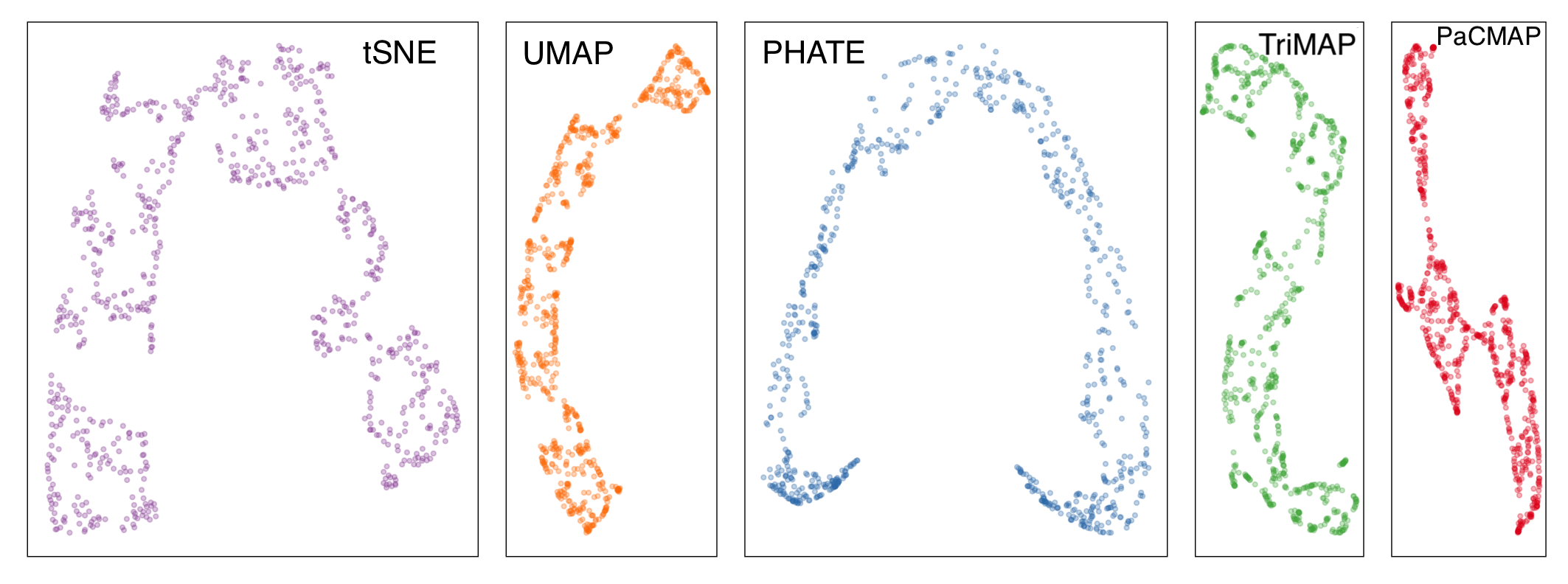
Candidates for NLDR layout

  1. tSNE, b. UMAP, c. PHATE, d. TriMAP, e. PaCMAP

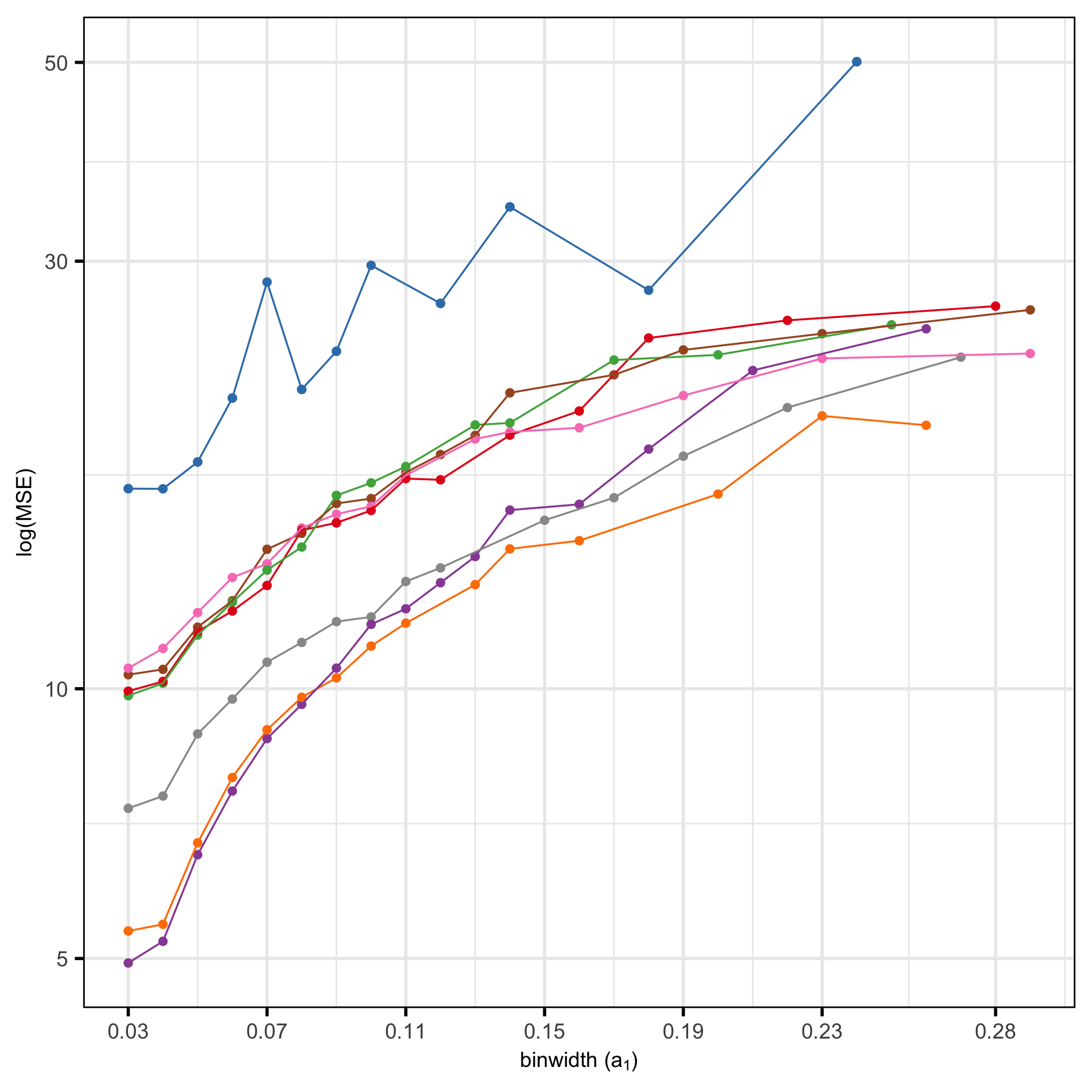
MSE of candidates
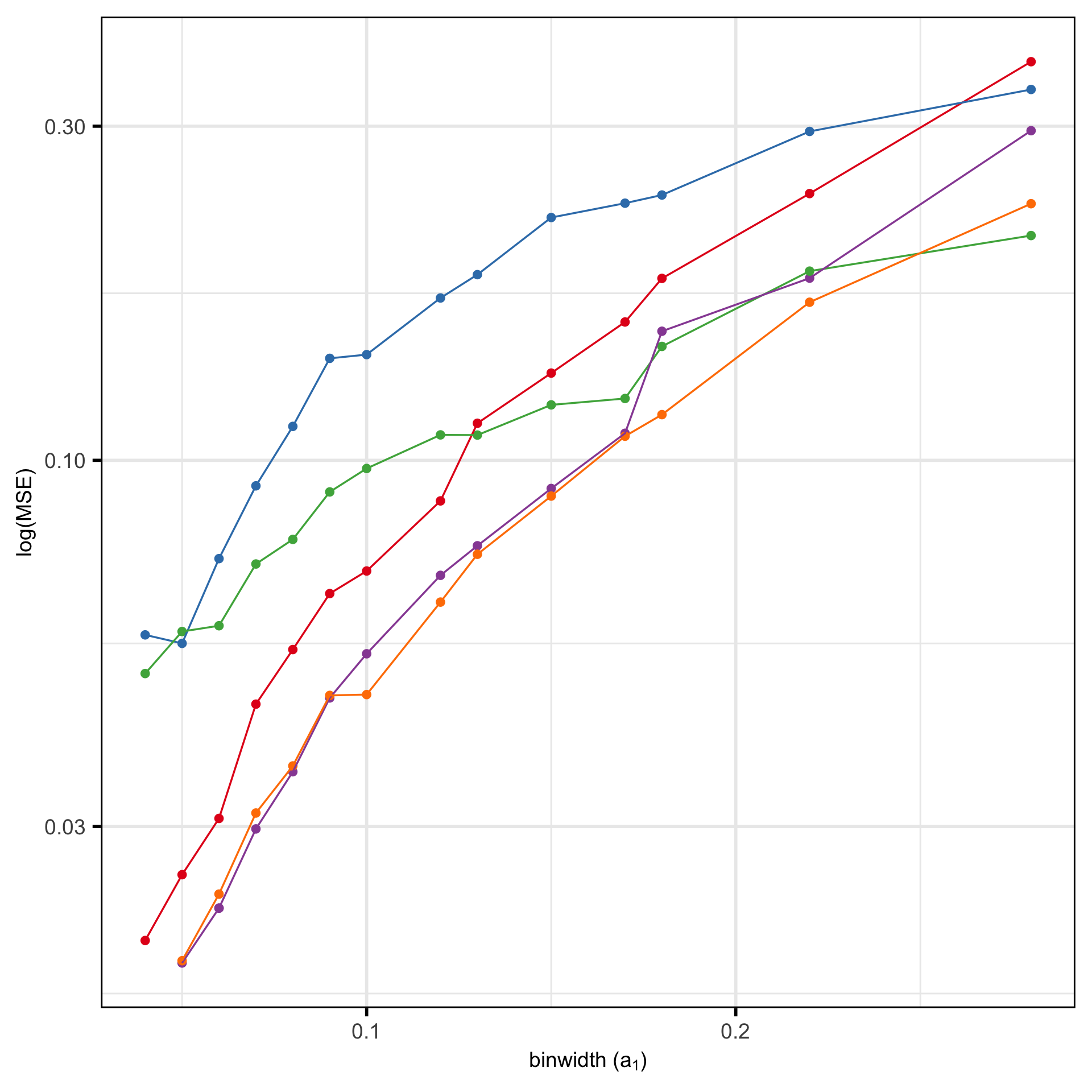
  • PHATE not competitive
  • Not much difference between any other method based on Error
  • No elbow, just gradual decrease as number of (non-empty) bins increase
Chosen fit for S-curve

tSNE with perplexity: 27
Fills out the width of the S

Pretty good! Can you see the twist??

PBMC data set
MSE of candidates
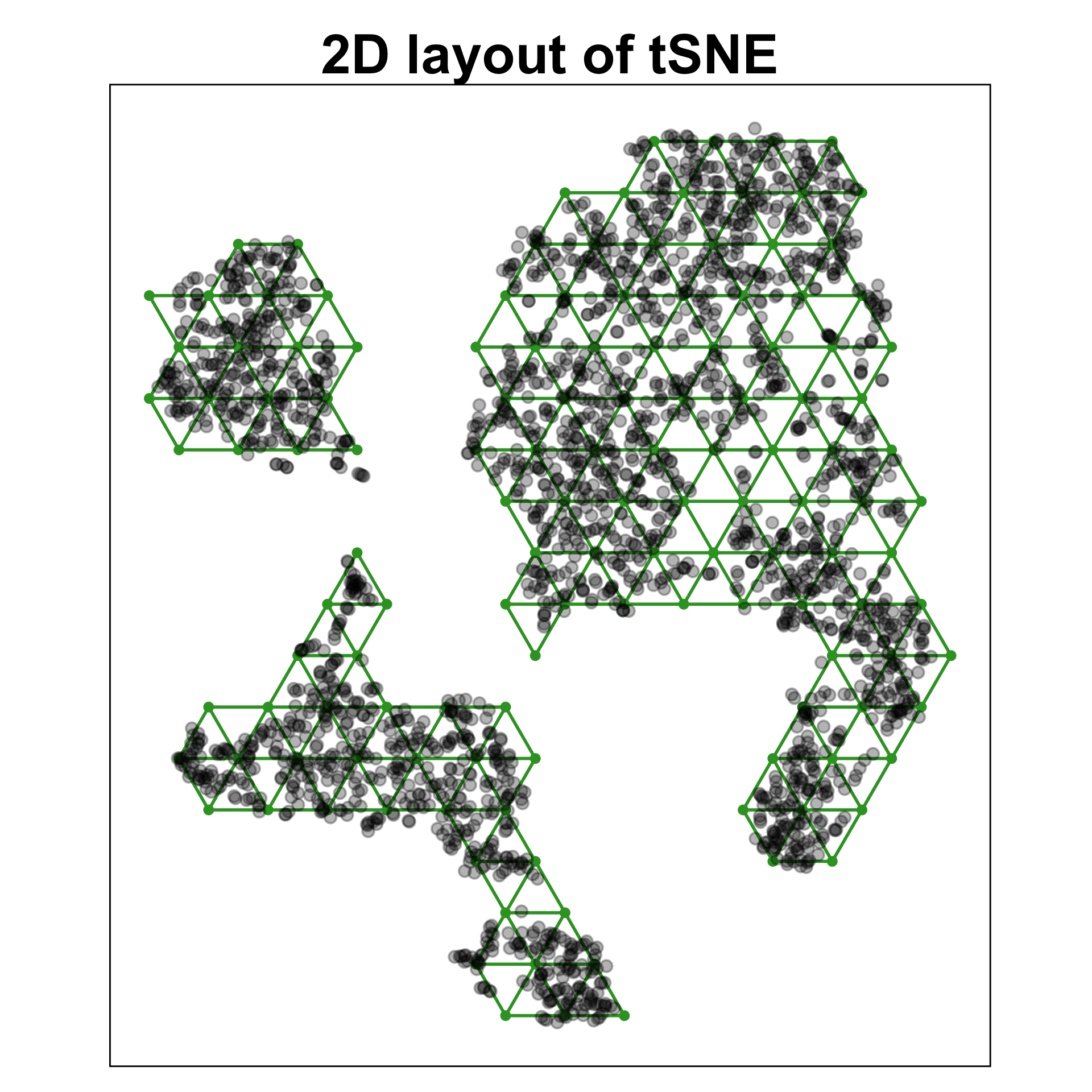
Chosen fit for PBMC data set

tSNE with perplexity: 30
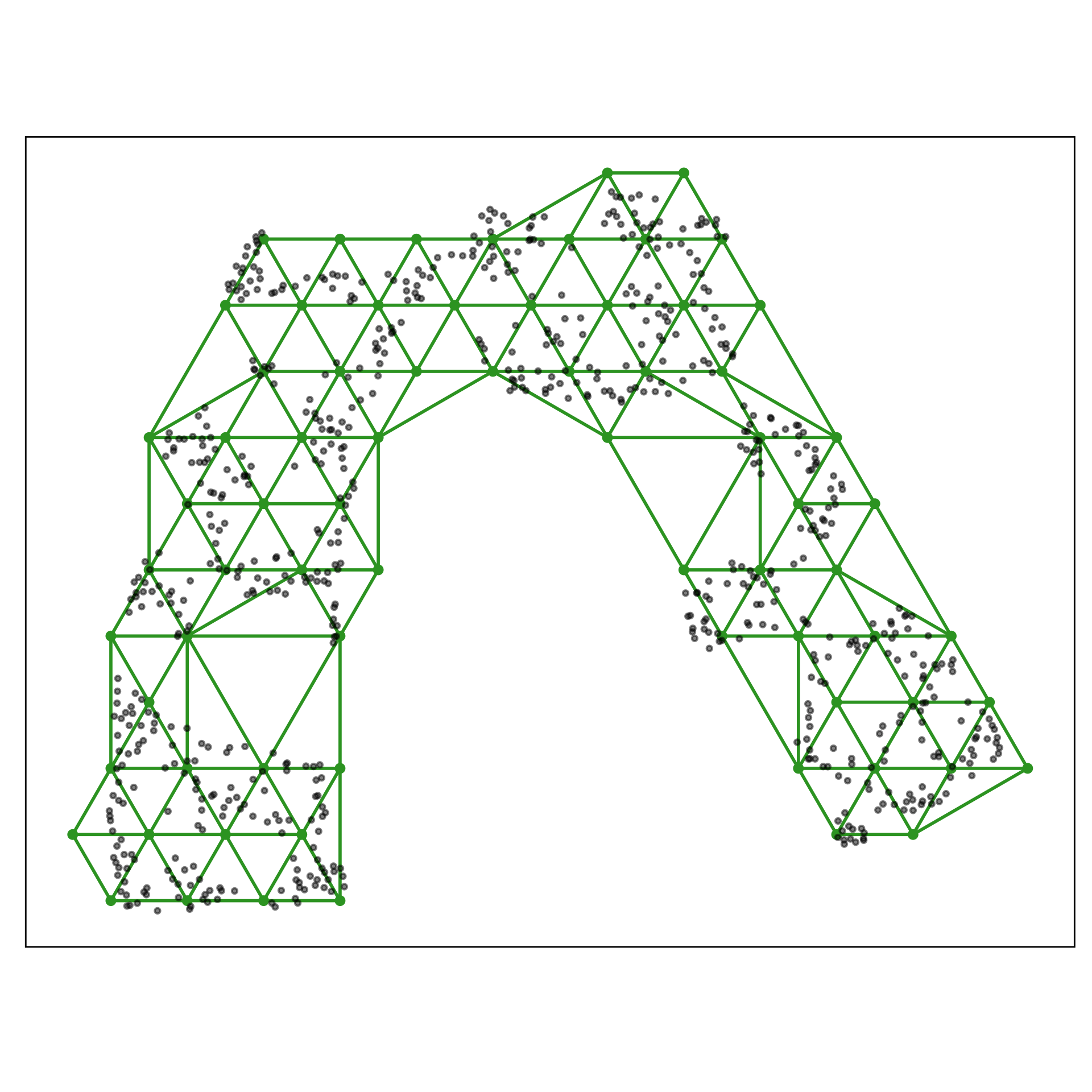
Clusters with small separations, non-linear clusters

Densed points, filled out clusters

Five Gaussian clusters in 4D

tSNE

PaCMAP

Linked plots

  • Assess the model fits the points everywhere, better in some places, simply mismatches the pattern


quollr


questioning how a high-dimensional object looks in low-dimensions using r

Summary

Note

  • Provided a method to create a model from a NLDR layout that can be displayed with the data to assess the fit.
  • Make it easier for researchers to make better decisions on which NLDR layout is best for their work.

Jayani P.G. Lakshika


Collaborators: Prof. Dianne Cook, Dr. Paul Harrison, Dr. Michael Lydeamore, Dr. Thiyanga S. Talagala